
Is Retiring to Panama a Good Idea in 2026? Your Definitive Answer
Yes, Panama remains one of the world’s most attractive retirement destinations in 2026. The country offers a proven Pensionado visa program, affordable living costs, tropical climate, and established expat communities that make the transition smooth for retirees.
I’ve watched Panama evolve over the years, and 2026 brings even more advantages. The economy stays stable with the US dollar as official currency, eliminating exchange rate worries. Modern infrastructure in cities like Panama City rivals North American standards, while places like Boquete offer mountain tranquility at a fraction of US costs.
The Pensionado program continues delivering exceptional value — requiring just $1,000 monthly pension income while providing discounts on everything from flights to medical care. Combined with comprehensive relocation support and welcoming expat networks, Panama checks every box for comfortable retirement living.
The Enduring Allure of Panama: Why Retirees Choose It in 2026

Panama’s economic stability anchors its appeal — the US dollar eliminates currency fluctuation stress while the economy grows steadily at 3.2% annually. This financial predictability lets retirees budget confidently without worrying about devaluation eating their savings.
Geography delivers year-round advantages. You’re 2.5 hours from Miami, making family visits manageable. The climate stays consistently warm (75-85°F) with distinct dry and wet seasons, perfect for those escaping harsh winters. Natural diversity astounds — Pacific and Caribbean coasts, cloud forests, and mountains all within driving distance.
Infrastructure improvements continue impressing visitors. Panama City’s metro system, modern hospitals, and high-speed internet rival developed nations. The expat community has matured beautifully — established networks in Boquete, Coronado, and Panama City provide instant social connections and practical support.
Cultural acceptance runs deep here. Panamanians genuinely welcome foreign retirees, viewing them as contributors to local economies rather than burdens. This attitude creates a welcoming environment where integration feels natural, not forced.
Panama’s Pensionado Visa Program: Your Golden Ticket to Retirement in 2026
The Pensionado visa requires just $1,000 monthly pension income — or $750 if you purchase $100,000+ in Panama real estate. This lifetime pension can come from government sources, private pensions, or Social Security payments, making qualification accessible for most retirees.
Here’s what makes this program exceptional: Pensionado holders receive substantial discounts across Panama. We’re talking 50% off entertainment, 25% off airline tickets, 15% off hospital bills, 10% off prescription medicines, and 20% off professional services. These savings add up to hundreds monthly.
The visa grants permanent residency status with work authorization, though most holders focus on retirement activities. Family members can join under your application, and after five years, you’re eligible for Panamanian citizenship if desired.
Compared to Costa Rica’s more expensive Rentista program or Mexico’s temporary residence requirements, Panama’s Pensionado offers the best combination of low barriers and high benefits. I’ve seen applications approved in 6-12 months with proper documentation.
Step-by-Step: Applying for the Pensionado Visa in 2026
Start by gathering core documents: pension verification letter, police background check, medical certificate, and birth certificate — all apostilled and translated to Spanish. The pension letter must specify lifetime monthly payments of $1,000+ from an official source.
Submit your application through a Panamanian attorney (required by law). Expect 6-12 months processing time and roughly $2,500-4,000 in legal and government fees. Once approved, you’ll receive a carnet (ID card) providing access to all Pensionado discounts and benefits.
Cost of Living in Panama 2026: How Much Money is Needed to Retire Comfortably?
Most couples retire comfortably in Panama on $2,500-3,500 monthly, while singles manage well with $1,500-2,500. These budgets cover housing, food, utilities, healthcare, and entertainment in popular expat areas like Boquete or Coronado.
Housing dominates expenses. Rent ranges from $800-1,200 for nice two-bedroom apartments in expat-friendly areas, while purchasing costs $120,000-250,000 for quality homes. Panama City runs 30-40% higher, but mountain towns like Boquete offer excellent value.
Food costs vary dramatically by choices. Local markets provide fresh produce, meat, and fish at 60% less than US prices. Imported goods (US brands, specialty items) cost similar to home. Most retirees spend $300-500 monthly on groceries by mixing local and imported products.
Sample monthly budgets reveal the range:
- Frugal lifestyle: $1,500 (singles) / $2,200 (couples)
- Comfortable living: $2,200 (singles) / $3,200 (couples)
- Luxury retirement: $3,500+ (singles) / $5,000+ (couples)
Utilities stay reasonable — electricity ($80-150), water ($15-30), internet ($35-60), and cell service ($20-40) monthly. Transportation costs depend on location: $30 monthly bus passes in cities, or $300-500 monthly car ownership including insurance and fuel.
Healthcare adds $100-300 monthly for insurance premiums, with actual medical visits costing 50-70% less than US equivalents. Real estate opportunities can reduce housing costs significantly through strategic purchases.
Healthcare in Panama for Retirees: Options, Quality, and Costs in 2026
Panama’s healthcare system offers excellent private care with internationally trained doctors, especially in Panama City. Major hospitals like Hospital Punta Pacifica and Hospital Nacional maintain JCI accreditation, meeting US quality standards at 50-70% lower costs.
Private health insurance runs $100-300 monthly depending on age and coverage level. Companies like Assa and Mapfre offer comprehensive plans including specialist visits, emergency care, and prescription coverage. Many procedures require no prior authorization, unlike US managed care systems.
Typical medical costs demonstrate the savings: Doctor visits ($40-80), specialist consultations ($60-120), MRI scans ($400-600), and routine surgeries ($2,000-8,000). Prescription medications cost 30-60% less than US prices for both generic and brand-name drugs.
The public system (CSS) exists but most expats prefer private care for shorter wait times and English-speaking staff. Emergency services respond quickly in urban areas, though rural locations may require medical evacuation coverage. Dental and vision care offer exceptional value — full dental implants cost $1,200-2,000 versus $3,000-6,000 in North America.
Taxes for Retirees in Panama 2026: Understanding Your Obligations
Panama does NOT tax foreign-sourced income, including US Social Security, pensions, or investment returns earned outside Panama. This territorial tax system means your retirement income remains untouched by Panamanian taxes, creating significant savings for most retirees.
Only income generated within Panama faces taxation — rental income from Panamanian properties, local business profits, or employment wages. Even then, rates stay competitive with personal income tax brackets ranging from 15% to 25% on Panamanian-sourced income.
Other taxes affect daily life minimally: Property taxes run just 0.5-0.7% of assessed value annually, while sales tax (ITBMS) adds 7% to most purchases. Capital gains taxes apply only to Panamanian real estate sales, with exemptions for primary residences held over two years.
US citizens must still file annual US tax returns and report foreign accounts over $10,000 (FBAR requirements). However, foreign tax credits and exclusions often eliminate double taxation. Calculate your potential tax savings to understand the full benefit. Canadian and UK citizens face different requirements — consult qualified tax advisors familiar with your home country’s treaties with Panama.
Best Places to Retire in Panama 2026: Finding Your Perfect Spot
Location choice dramatically impacts your Panama retirement experience. Climate preferences, budget constraints, social needs, and healthcare access should guide your decision. Each major expat area offers distinct advantages for different retirement styles.
Consider proximity to quality healthcare, established expat communities, and amenities that matter to you. Mountain locations offer cooler temperatures and lower costs, while beach areas provide tropical paradise at higher prices. Urban centers deliver convenience and cultural activities but increase noise and traffic.
Panama City: Urban Living & Modern Amenities
The capital provides world-class healthcare, international dining, cultural events, and modern infrastructure including metro service. Costs run higher ($2,000-3,500 monthly for couples) but conveniences rival major US cities. Perfect for retirees wanting urban sophistication in the tropics.
Boquete: Mountain Retreat & Expat Hub
This mountain town offers spring-like weather year-round, established expat community, and excellent value ($1,800-2,800 monthly for couples). English is widely spoken, hiking trails abound, and the Tuesday market creates social connections. Ideal for active retirees seeking cooler temperatures.
Coronado & Pacific Beaches: Coastal Lifestyle
Beach living with modern amenities, golf courses, and easy Panama City access (90 minutes). Costs moderate ($2,200-3,200 monthly for couples) with excellent restaurants and established expat services. Perfect for beach lovers wanting convenience without isolation.
Azuero Peninsula (e.g., Pedasí, Las Tablas): Authentic Culture & Lower Costs
Experience authentic Panamanian culture with lower living costs ($1,500-2,500 monthly for couples). Smaller expat communities mean more local integration. Beautiful beaches, traditional festivals, and genuine cultural immersion appeal to adventurous retirees.
Bocas del Toro: Caribbean Charm & Island Life
Caribbean coast offers unique Afro-Caribbean culture, island lifestyle, and English-speaking locals. Costs vary widely ($1,800-3,500 monthly) depending on accommodation choices. Higher humidity and limited medical facilities suit healthy retirees seeking tropical adventure.
Pros and Cons of Retiring in Panama 2026: A Balanced View
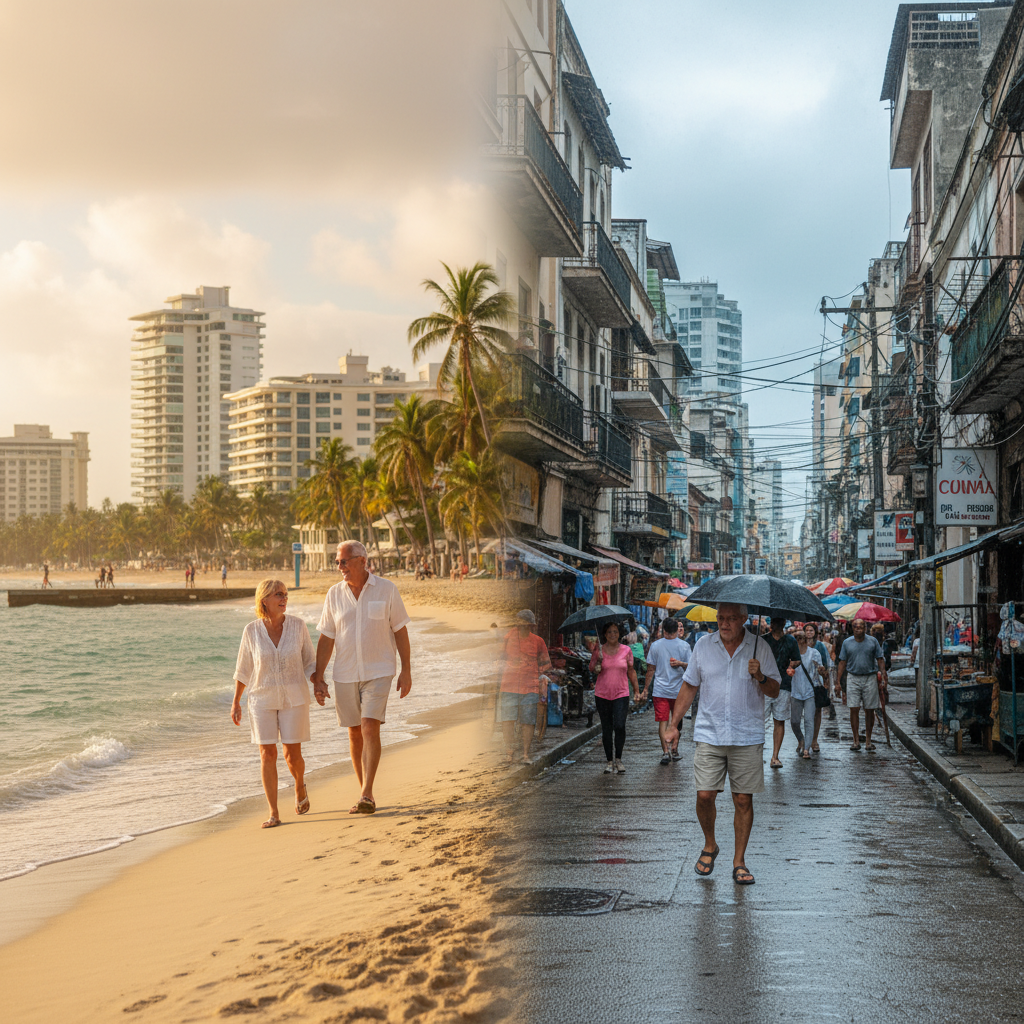
Advantages clearly outweigh drawbacks for most retirees. The Pensionado program delivers exceptional benefits, living costs stay 40-60% below North American levels, and the tropical climate eliminates seasonal weather concerns. Economic stability with US dollar usage removes currency risk completely.
Key benefits include:
- Generous Pensionado discounts on services and entertainment
- Modern infrastructure in urban areas with reliable utilities
- Welcoming expat communities providing instant social networks
- Excellent private healthcare at fraction of US costs
- No taxes on foreign-sourced retirement income
- Strategic location enabling easy travel throughout Americas
Potential challenges require honest consideration: Bureaucracy moves slowly, requiring patience for official processes. Spanish proficiency helps significantly, though English works in expat areas. Traffic congestion affects Panama City and major routes during peak hours.
Some retirees struggle with cultural differences — more relaxed time concepts, different business practices, and varying service standards. Humidity bothers certain individuals, particularly in coastal areas during rainy season. Safety concerns exist primarily around petty crime in urban areas, manageable with proper precautions.
Safety and Security in Panama 2026: Understanding the Realities for Retirees
Panama is generally safe for retirees who exercise normal urban precautions. Violent crime against expats remains uncommon, while petty theft (pickpocketing, break-ins) occurs mainly in certain Panama City neighborhoods and tourist areas.
Popular expat communities like Boquete, Coronado, and El Cangrejo maintain low crime rates with active security measures. Gated communities, security guards, and neighborhood watch programs create additional protection layers. Most incidents involve crimes of opportunity — unlocked cars, displayed valuables, or walking alone late at night.
Smart safety practices minimize risks: Avoid flashy jewelry and electronics in public, use hotel safes, stay alert in crowded areas, and research neighborhoods before visiting. Certain Panama City areas (Río Abajo, Pedregal, parts of San Miguelito) require extra caution, especially after dark.
Government investment in tourism police and infrastructure improvements continues enhancing security. The National Police maintain visible presence in expat areas, and emergency response times stay reasonable in populated regions. Most retirees report feeling safer in Panama than many US urban areas once they learn local patterns.
Panama vs. Costa Rica for Retirement 2026: Which Paradise is Right for You?
Both countries offer safe, affordable retirement with comparable safety levels when proper precautions are taken. Panama edges ahead with superior infrastructure, more generous visa benefits, and use of US dollars, while Costa Rica appeals through established eco-tourism and “Pura Vida” culture.
Panama advantages: Pensionado discounts save hundreds monthly, modern infrastructure (metro, hospitals, airports), no foreign income taxes, and lower overall costs. The US dollar eliminates exchange rate concerns, and geographic location provides easier North American access.
Costa Rica strengths: More established expat services, superior environmental protection, extensive national park system, and deeper eco-tourism infrastructure. The healthcare system receives higher international ratings, though costs run higher than Panama.
Safety comparisons show similar patterns — both countries have safe expat areas and locations requiring caution. Panama City and San José both need urban awareness, while smaller expat communities (Boquete vs. Atenas) maintain excellent security records.
Cost differences favor Panama significantly. Monthly budgets run 15-25% lower across housing, food, and services. Panama’s Pensionado benefits provide additional savings unavailable in Costa Rica’s more expensive Rentista program requiring $2,500 monthly income or $60,000 bank deposits.
Choose Panama for better value, modern infrastructure, and generous expat benefits. Pick Costa Rica for established eco-tourism, slightly better healthcare ratings, and more mature expat service networks.
Other Pathways to Residency: Beyond the Pensionado Visa in 2026
The Self-Solvency Visa suits wealthy retirees without pensions. Requirements include $300,000 minimum in Panamanian banks or $500,000 in real estate investments. This option provides permanent residency without pension income requirements, though it lacks Pensionado discount benefits.
Panama’s New Investor Passport (Law 493 of 2025) creates a fast-track citizenship option for high-net-worth individuals. Investment requirements start at $500,000 in approved sectors — real estate, business development, or government bonds. The program grants citizenship within 12-18 months versus traditional 5-year residency requirements.
This investor pathway appeals to retirees seeking enhanced global mobility, tax planning flexibility, and business opportunities. Benefits include visa-free travel to 140+ countries, potential tax advantages, and full citizenship rights including voting and property ownership without restrictions.
Other options include the Friendly Nations Visa (requiring economic ties to Panama) and various investor visas. However, most retirees find the Pensionado program provides the best combination of accessibility, benefits, and long-term security for traditional retirement planning.
Cultural Integration & Expat Life in Panama 2026: Making the Transition Smooth
Learning basic Spanish accelerates integration significantly. While English works in expat areas, Spanish opens doors to authentic local experiences, better service, and genuine friendships with Panamanian neighbors. Online apps like Duolingo or local classes in Boquete and Panama City provide excellent starting points.
Established expat communities offer immediate social connections. Organizations like Boquete Expat Network, Panama Relocation Tours, and various Facebook groups organize regular activities, provide practical advice, and create lasting friendships among retirees.
Understanding local customs enhances daily life. Panamanians value personal relationships, operate on more relaxed time schedules, and appreciate respectful interest in their culture. Participating in local festivals, supporting neighborhood businesses, and showing genuine curiosity about Panamanian history creates positive community connections.
Key Takeaways for Retiring in Panama in 2026
Panama delivers exceptional retirement value through proven programs and infrastructure. The Pensionado visa provides accessible entry with substantial ongoing benefits, while territorial taxation protects foreign retirement income from local taxes.
Living costs stay 40-60% below North American levels without sacrificing modern amenities or quality healthcare. Established expat communities in locations like Boquete, Coronado, and Panama City ensure smooth transitions and lasting social connections.
Success requires proper planning — consult qualified attorneys for visa applications, research locations thoroughly, and consider professional relocation services for complex logistics. Panama’s retirement advantages continue attracting discerning retirees seeking tropical paradise with financial sensibility.
Frequently Asked Questions (FAQ) About Retiring in Panama
Can I work in Panama on a retirement visa? The Pensionado visa technically prohibits employment, though passive income from investments, rental properties, or online businesses generally faces no restrictions. Consult immigration attorneys for specific situations requiring work authorization.
What is the internet and connectivity like in Panama? Urban areas and popular expat locations offer reliable high-speed internet (50-100 Mbps) for $35-60 monthly. Fiber optic networks cover Panama City, Boquete, and Coronado extensively. Remote rural areas may have limited options requiring satellite internet solutions.
Is it easy to open a bank account in Panama as an expat? Major banks require extensive documentation including reference letters, utility bills, and income verification. The process can take 2-4 weeks with proper legal assistance. Some banks prefer clients with existing residency status, making account opening easier after visa approval.
